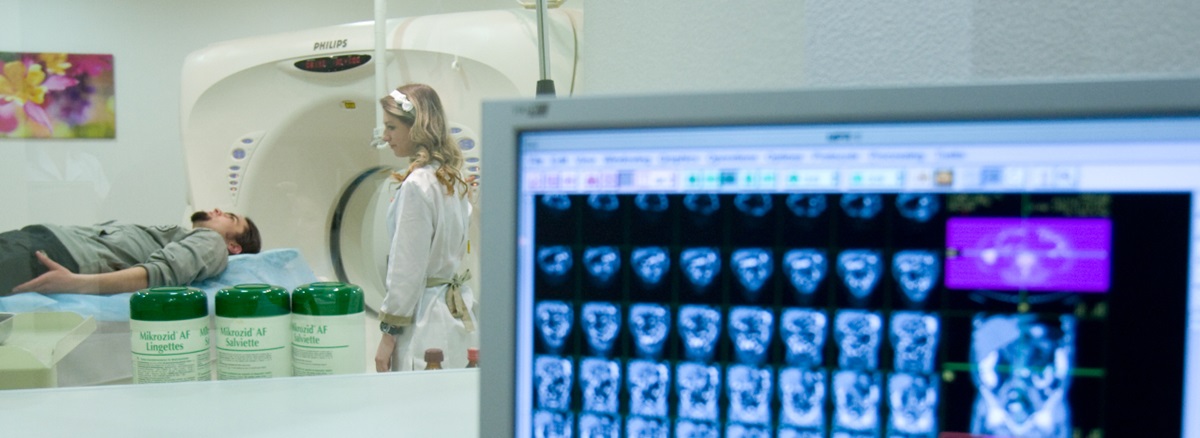
Medical imaging has become an indispensable component of modern healthcare, significantly enhancing the ability to diagnose and treat various diseases. Over recent decades, the development of sophisticated imaging technologies has revolutionized medical practice, allowing for precise visualization of internal structures and pathological conditions. These advancements support clinicians in making informed decisions, ultimately improving patient outcomes. […]
Medical imaging has become an indispensable component of modern healthcare, significantly enhancing the ability to diagnose and treat various diseases. Over recent decades, the development of sophisticated imaging technologies has revolutionized medical practice, allowing for precise visualization of internal structures and pathological conditions. These advancements support clinicians in making informed decisions, ultimately improving patient outcomes. […]
Medical imaging has become an indispensable component of modern healthcare, significantly enhancing the ability to diagnose and treat various diseases. Over recent decades, the development of sophisticated imaging technologies has revolutionized medical practice, allowing for precise visualization of internal structures and pathological conditions. These advancements support clinicians in making informed decisions, ultimately improving patient outcomes.
Medical imaging encompasses a broad spectrum of diagnostic and therapeutic tools that utilize both ionizing and non-ionizing radiation, along with hybrid modalities. Conventional radiology techniques such as X-rays and fluoroscopy provide essential imaging capabilities. Angiography enables detailed visualization of blood vessels, aiding in vascular disease management. Computed tomography (CT) offers cross-sectional images of the body, facilitating detailed anatomical assessments. Ultrasound, a non-ionizing modality, is widely used for soft tissue imaging, obstetrics, and cardiac evaluations. Magnetic resonance imaging (MRI) provides high-contrast images of soft tissues, brain, and spinal cord, and is increasingly used in neurological and musculoskeletal diagnostics.
Other specialized techniques include mammography for breast cancer screening, densitometry for bone density assessment, dental radiology for oral health, and diagnostic nuclear medicine. Positron emission tomography (PET), often combined with computed tomography in PET-CT scans, provides functional imaging crucial in oncology, neurology, and cardiology. SPECT imaging offers insights into blood flow and organ function, while PET-MR combines metabolic and anatomical data for comprehensive analysis. Interventional radiology, involving image-guided minimally invasive procedures, has expanded treatment options with reduced risks and recovery times.
Despite these technological advances, disparities remain in global access to medical imaging. Many low- and lower-middle-income countries face significant barriers, including the high costs of acquiring advanced equipment and a shortage of trained healthcare professionals skilled in operating these systems. These challenges hinder the delivery of essential diagnostic services in rural and underserved areas, impacting health outcomes.
The World Health Organization (WHO) actively collaborates with international partners and medical device manufacturers to develop innovative solutions aimed at improving diagnostic capabilities in remote and resource-limited settings. Such efforts include designing affordable and portable imaging devices suitable for diverse environments. Furthermore, the WHO and its partners prioritize training programs that focus on the safe and effective use of medical imaging technologies, emphasizing patient safety and quality of care. These initiatives are crucial for building local capacity and ensuring equitable healthcare access worldwide.
For a comprehensive overview of how modern health technologies are evolving, explore the evolving landscape of AI in healthcare. Additionally, integrated support systems are vital for streamlining healthcare workflows—learn more about how artificial intelligence can enhance these support infrastructures by visiting support systems and AI. As technological integration continues, innovative approaches such as virtual reality are also being employed to elevate athletic performance, merging sports science with cutting-edge visualization tools, detailed at the intersection of sports and virtual reality. These advancements are part of a broader movement towards transforming medicine through intelligent systems, which is extensively discussed at how AI is improving medical outcomes.