


Healthcare data integration plays a pivotal role in transforming modern medical services. By unifying information from numerous sources, providers can deliver more accurate diagnoses, personalized treatments, and efficient workflows. This comprehensive approach not only improves patient care but also helps healthcare organizations operate more cost-effectively. Understanding the key applications and best practices of data integration is essential for leveraging its full potential in the healthcare industry.
Healthcare data integration involves merging various data streams—such as electronic health records (EHRs), medical devices, insurance data, and patient portals—into a centralized system. This process entails cleaning, transforming, and consolidating data to facilitate meaningful analysis and reporting. As a result, healthcare practitioners gain a holistic view of patient histories, enabling more informed decision-making. For more insights into how healthcare providers manage complex data environments, explore a detailed overview of provider data management here.
Significant Cost Savings Through Data Integration
Implementing efficient data integration solutions can lead to substantial savings in both time and money for healthcare institutions. Utilizing tools like Astera Data Pipeline, which offers no-code automation and scheduling, streamlines data workflows and minimizes manual efforts. These efficiencies are vital in reducing operational costs and improving service delivery. To see how automation can optimize your data processes, review our whitepapers.
The Growing Importance of Data Integration in Healthcare
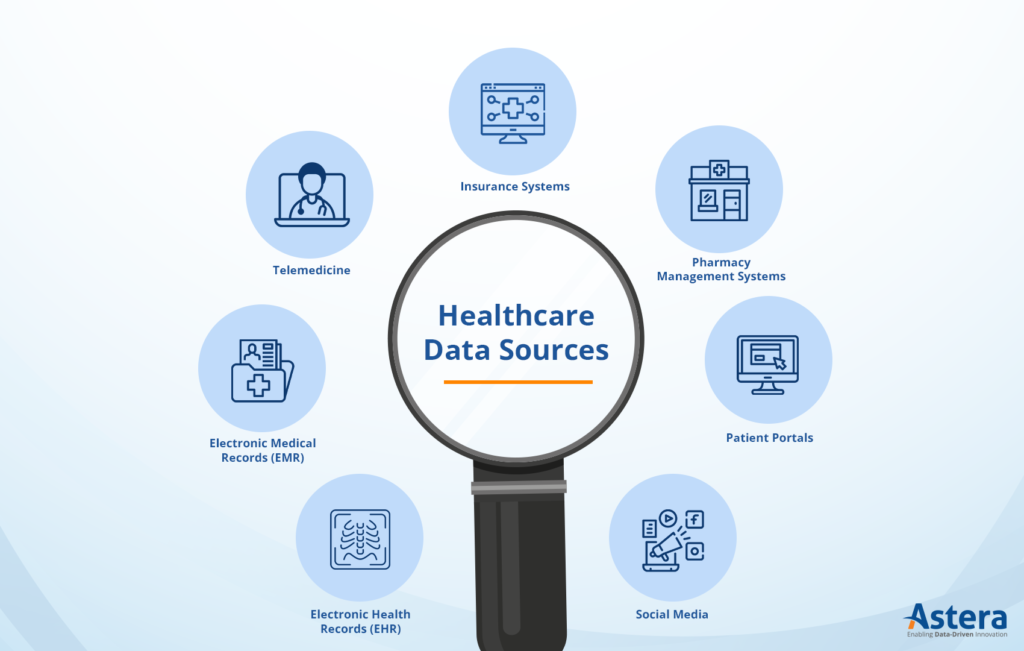
The healthcare sector continuously generates vast amounts of data from diverse sources, including EHRs, EMRs, telemedicine platforms, insurance systems, pharmacy management, social media, and more. This data is often stored in structured formats, making it readily accessible, especially when managed by trained professionals through specialized programs. However, secondary data sources—such as telehealth systems, insurance claims, and social media—introduce complexity in ingestion and consolidation.
Healthcare data integration is essential for creating a unified repository where data is cleansed and transformed into a usable format for analytics and reporting. This enables healthcare providers to identify trends, improve treatment protocols, and optimize resource allocation. For a broader understanding of streamlining healthcare data, see our insights on simplifying enterprise data management.
Use Cases Demonstrating the Power of Data Integration
Here are some prominent examples illustrating the transformative effects of healthcare data integration:
1. Patient-360 View
Creating a comprehensive, 360-degree view of each patient is fundamental to personalized healthcare. This approach consolidates various data points—medical history, EHR records, insurance claims, demographic information, lab results, and imaging—into a single platform. Enriching this data with third-party information enhances its accuracy and depth.
Having access to a complete patient profile allows clinicians to discern patterns and trends, leading to better diagnoses, preventative care, and tailored treatment plans. Increasingly, telemedicine providers rely on integrated data systems to deliver personalized virtual care, emphasizing the importance of interoperability in healthcare systems.
2. Crisis Response
The COVID-19 pandemic underscored the critical need for fast, reliable data integration during health crises. Consolidated, high-quality data enables rapid decision-making—such as identifying vulnerable populations, tracking infection spread, and coordinating vaccination efforts. Healthcare organizations can respond more effectively to emergencies by leveraging integrated data to plan resource allocation and response strategies.
3. Fraud Detection
Healthcare fraud, including identity theft, overbilling, and false claims, leads to billions in losses annually. A centralized, accurate data repository facilitates the application of advanced data mining techniques to detect anomalies and suspicious activities effectively. Preventing fraud not only saves money but also ensures resources are allocated to genuine patient care.
Simplify Healthcare Data Integration
Tools like Astera Data Pipeline enable healthcare organizations to accelerate their data integration efforts while maintaining user-friendly interfaces. Automating data workflows reduces manual errors and improves operational efficiency. To explore how automation can streamline your data processes, consider trying a free trial.
Challenges in Healthcare Data Integration
Despite its benefits, integrating healthcare data presents significant challenges that must be addressed to unlock its full value:
Interesting:
- Advancing healthcare through data integration a new era in patient outcomes
- Unlocking improved patient outcomes through seamless healthcare data integration
- Transforming healthcare through data integration unlocking benefits and overcoming challenges
- Enhancing healthcare outcomes through active patient participation
Data Silos and Interoperability Barriers
Data silos occur when information is stored in isolated systems that cannot communicate with each other. This is common due to the use of different EHR/EMR platforms and legacy systems incompatible with modern, cloud-based solutions. These silos hinder real-time data sharing and collaboration across departments and organizations. Improving interoperability requires adopting standardized protocols and platforms.
Lack of Standardization
Inconsistent data formats and standards complicate data consolidation. When healthcare providers use varying data structures, it leads to duplicate records, inaccurate insights, and compromised patient safety. Implementing industry standards such as HL7 and FHIR facilitates seamless data exchange and integration, enabling healthcare systems to communicate more effectively. Learn more about these standards and their role in healthcare interoperability.
Data Privacy and Security Concerns
Handling sensitive health information necessitates strict security measures to prevent unauthorized access and breaches. With increasing digitalization, compliance with regulations like HIPAA and GDPR is crucial. Data breaches exposing millions of patient records highlight the importance of encryption, role-based access controls, and secure data transfer protocols to protect patient confidentiality during integration processes.
Best Practices for Effective Healthcare Data Integration
Implementing proven strategies ensures smooth integration and maximizes data utility:
Transition to Cloud Data Warehousing
Cloud platforms such as Amazon Redshift and Snowflake provide scalable, high-capacity repositories capable of handling large data volumes and diverse formats. Cloud data warehouses offer powerful computing resources for rapid analytics, scalability, and flexibility—essential for managing healthcare data at scale.
Identify and Document Data Sources
Understanding where all critical data resides is fundamental. Healthcare providers should catalog internal and external data sources, including EHR systems, insurance databases, and third-party applications. Proper documentation helps plan integration workflows and ensures no vital data is overlooked.
Adopt Industry Standards Like FHIR and HL7
Using established standards such as FHIR and HL7 streamlines data exchange across disparate systems. These protocols provide a common language for healthcare data, enabling smoother interoperability and reducing integration complexities.
Prioritize Data Security and Privacy
Implement comprehensive security measures, including encryption, access controls, and regular audits, to ensure compliance with privacy regulations. Protecting sensitive patient data fosters trust and reduces the risk of costly breaches.
Looking for a Data Management Solution?
Astera offers a comprehensive, no-code data integration platform tailored for healthcare organizations. With features supporting HL7, EDI, and various healthcare-specific formats, our platform simplifies interoperability and ensures compliance with standards like HIPAA and GDPR. Discover how our solutions can meet your data management needs.
Transform Healthcare Data Integration with Astera
Astera Data Pipeline provides a robust, end-to-end platform that enables healthcare providers to unify data effortlessly—without writing a single line of code. Its capabilities include:
- Extracting data from diverse sources, transforming it with customizable rules, and loading it into your preferred destinations
- Connecting seamlessly with third-party applications and databases via pre-built connectors
- Ensuring data quality through validation, profiling, and cleansing tools
- Applying role-based access controls and encryption to safeguard sensitive information
- Integrating with cloud platforms like Amazon S3, Snowflake, and Microsoft Azure Blob Storage
- Automating workflows with scheduling and orchestration features
Powered by AI-driven features like semantic data mapping and support for varying data latencies, Astera Data Pipeline is ideal for healthcare data consolidation. Start your risk-free trial today and unlock clinical insights that improve patient outcomes.
Frequently Asked Questions About Healthcare Data Integration
- Why is integrating healthcare data so important? It ensures comprehensive patient insights, leading to better decision-making, improved care, and operational efficiency.
- What are common challenges faced during data integration? Inconsistent formats, legacy systems, privacy concerns, and maintaining data quality.
- How does Astera simplify the process? Our platform offers an intuitive interface that supports healthcare-specific standards, facilitating interoperability without coding.
- How do we address privacy during integration? By adhering to regulations like HIPAA, implementing strict access controls, and anonymizing data where appropriate.
- Can integrated data aid predictive analytics? Yes, unified datasets enable advanced analysis to forecast health trends and identify at-risk groups.
- How does data integration influence costs? It reduces redundant testing, minimizes errors, and streamlines workflows, leading to cost savings.
- What are best practices for successful integration? Understanding your data sources, adopting standards, securing data, and engaging stakeholders throughout.
- How does data integration support telemedicine? It allows remote providers to access comprehensive records, facilitating informed virtual care.
- What role does HL7 play? HL7 standards enable efficient and effective exchange of healthcare information across different systems.
Explore more about how data management solutions can revolutionize healthcare operations and patient care by visiting our resources and success stories.