Patient safety is a fundamental aspect of healthcare that emphasizes preventing harm to patients during the delivery of medical services. It involves systematic efforts to reduce errors and improve care outcomes, ultimately safeguarding the well-being of those receiving treatment. While often confused with laboratory safety—which aims to protect laboratory personnel—patient safety specifically focuses on minimizing […]
Patient safety is a fundamental aspect of healthcare that emphasizes preventing harm to patients during the delivery of medical services. It involves systematic efforts to reduce errors and improve care outcomes, ultimately safeguarding the well-being of those receiving treatment. While often confused with laboratory safety—which aims to protect laboratory personnel—patient safety specifically focuses on minimizing […]
Patient safety is a fundamental aspect of healthcare that emphasizes preventing harm to patients during the delivery of medical services. It involves systematic efforts to reduce errors and improve care outcomes, ultimately safeguarding the well-being of those receiving treatment. While often confused with laboratory safety—which aims to protect laboratory personnel—patient safety specifically focuses on minimizing risks associated with clinical care, including laboratory testing and diagnostics. Both safety types are vital, but they serve distinct purposes and require different strategies.
Understanding the Concept of Patient Safety
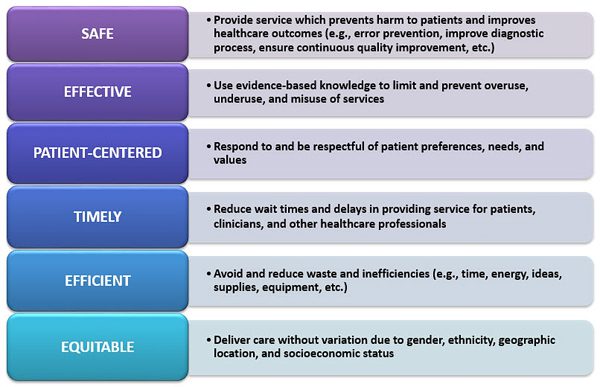
Patient safety revolves around the principle of “Do No Harm,” a cornerstone of medical ethics. It entails proactive measures to prevent avoidable injuries and adverse events resulting from healthcare interventions. Medical laboratory professionals play a pivotal role in fostering a culture of safety, ensuring that laboratory processes support accurate and timely results that influence patient care. The Institute of Medicine (IOM), now part of the National Academy of Medicine, characterizes quality healthcare as being safe, effective, patient-centered, timely, efficient, and equitable. These six aims serve as a guide for continuous improvement in all aspects of healthcare delivery.
IOM’s Six Aims for Healthcare and Their Relevance to Laboratory Medicine
Each of the six quality aims presents opportunities for laboratory professionals to enhance patient outcomes. Effective assessment and optimization of the entire testing process—known as the total testing process (TTP)—are crucial. The TTP encompasses preanalytical, analytical, and postanalytical phases. Advances have significantly minimized errors during the analytical phase, but the preanalytical and postanalytical stages remain vulnerable to errors such as incorrect test ordering, misinterpretation of results, and reporting inaccuracies. Supporting studies highlight the importance of evaluating each phase critically, identifying weaknesses, and implementing process improvements.
Laboratory teams should actively collaborate with clinicians, nurses, and other healthcare providers, forming interdisciplinary partnerships that build trust and facilitate open communication. Such collaborations extend beyond laboratory walls, involving efforts to improve patient safety through shared accountability. Leaders and professionals are encouraged to participate in teams dedicated to safety initiatives, emphasizing transparent reporting and continuous learning.
How Laboratory Professionals Can Positively Influence Patient Safety
- Embed patient safety as a core value within the laboratory’s mission, making it a priority in daily operations.
- Promote a culture where all staff understand safety principles, supported by ongoing education and training.
- Support the implementation of a ‘just culture’ framework that focuses on systemic issues rather than individual blame, addressing unsafe behaviors through systemic solutions while maintaining accountability. The Agency for Healthcare Research and Quality (AHRQ) describes this approach as crucial for fostering safety.
- Foster behaviors that reinforce safety, such as transparency, teamwork, effective communication, respect, and constructive feedback.
- Incorporate the patient safety competencies outlined by the IOM into everyday practice, including:
- Providing patient-centered care that recognizes the individual needs of each patient.
- Applying evidence-based practices to laboratory procedures to support quality improvements.
- Utilizing quality improvement tools to identify and reduce errors across processes.
- Leveraging informatics to enhance communication and data management.
- Collaborating within interprofessional healthcare teams to develop and implement innovative care solutions.
Additional Resources and References
To deepen understanding, professionals can explore various authoritative resources, including position papers like the Patient Safety and Clinical Laboratory Science by ASCLS and comprehensive reports from the Institute of Medicine. Engaging with current research and quality initiatives helps laboratories stay aligned with best practices in patient safety.
Enhancements in health technology—such as virtual and augmented reality tools, detailed virtual reality applications in medicine—along with artificial intelligence, are transforming healthcare delivery. These innovations assist in reducing errors and improving diagnostic accuracy, underscoring the importance of continuous adaptation and education in laboratory safety.
Conclusion
The pursuit of patient safety is an ongoing journey that requires commitment, collaboration, and a proactive approach from all healthcare professionals. Laboratory teams, as integral parts of the healthcare system, must prioritize safety at every stage—preanalytical, analytical, and postanalytical—to ensure the best possible outcomes. By fostering a safety-oriented culture, employing evidence-based practices, and leveraging technological advancements, laboratory professionals can significantly contribute to reducing errors and protecting patients.
For further insights into the evolving landscape of healthcare safety, explore this perspective on virtual reality in medicine and the role of emerging technologies in improving diagnostic accuracy and healthcare quality.