


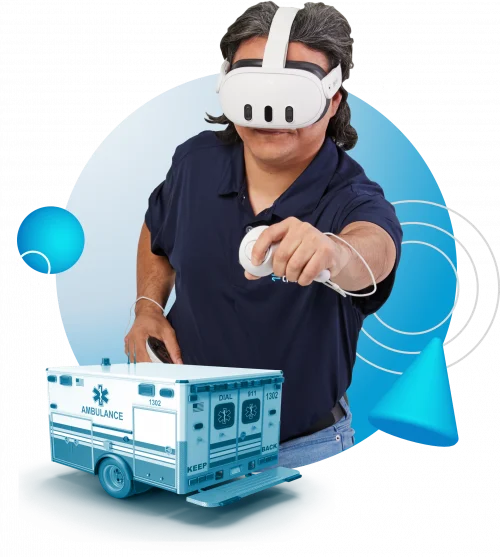
The future of healthcare education lies in innovative, immersive training methodologies that prepare professionals more effectively and efficiently. Virtual reality (VR) has emerged as a groundbreaking tool, offering realistic simulations that enhance skill development, foster confidence, and streamline career pathways for current and aspiring healthcare workers. By integrating VR into training programs, institutions can provide learners with safe, standardized, and highly engaging experiences that mimic real-world clinical environments. This approach not only accelerates learning but also addresses critical workforce shortages by expanding access to high-quality education and practice opportunities.
The Features of Health Sciences VR Training
Health sciences VR simulations present a versatile, standardized, and flexible learning platform suitable for a wide range of healthcare disciplines. These simulations are designed to be asynchronous and independent, allowing learners to acquire vital skills at their own pace while receiving real-time coaching and feedback. This method supports a more personalized educational experience, ensuring that each participant can focus on their unique learning needs. Moreover, the design process involves a team of Certified Healthcare Simulation Educators who adhere to the Healthcare Simulation Standards of Best Practice TM, as recommended by the International Nurses Association for Clinical Learning and Simulation (INACSL). Such rigorous standards guarantee the quality and relevance of each simulation, aligning with current industry requirements.
Targeted Content Alignment
The content within these virtual simulations is meticulously developed based on best practices and aligned with federal regulations, industry standards published by various professional associations, and discipline-specific curricula. This ensures that learners are exposed to accurate, up-to-date information that reflects the evolving landscape of healthcare. The simulations are adaptable to multiple roles and settings, making them highly versatile for training diverse healthcare professionals. To deepen the educational impact, many programs incorporate insights from peer-reviewed research and involve extensive input from subject matter experts. This collaborative approach ensures the simulations remain relevant and effective in preparing learners for real-world challenges.
Peer-Reviewed Validation
All VR simulations undergo thorough peer review and collaborative development, involving hundreds of experts and stakeholders. This extensive vetting process guarantees that the training content is both scientifically accurate and practically applicable. Continuous updates and improvements are driven by feedback from real users and industry trends, ensuring that the simulations stay aligned with current healthcare practices and standards. This peer-validation process reinforces confidence in the training tools, making them a reliable resource for educational institutions and healthcare organizations.
Broad Applicability Across Healthcare Roles
Transfr’s immersive VR training solutions are designed to serve a wide array of healthcare roles, from entry-level technicians to advanced clinicians. The foundational content supports multiple disciplines and settings, fostering an integrated approach to healthcare education. This flexibility enhances accessibility and allows organizations to maximize their training investments by preparing a multilayered workforce capable of meeting diverse clinical demands. The ability to practice procedures repeatedly in a risk-free environment empowers learners to build competence and confidence before engaging with real patients.
Unlimited Practice Opportunities
One of the most significant advantages of VR training is the capacity for unlimited, on-demand practice without additional costs per user. Learners can repeatedly simulate critical procedures, such as infection control, patient safety practices, or data collection, at any time and from any location. This immersive, coach-guided practice not only improves technical skills but also enhances decision-making and situational awareness. Such comprehensive training ensures that healthcare professionals are better prepared to deliver safe, effective patient care in high-pressure environments.
How Virtual Reality Enhances Health Sciences Education
The integration of VR technology transforms traditional health sciences training by providing dynamic, interactive learning experiences. Visual and tactile engagement helps learners retain information more effectively, while simulated clinical scenarios prepare them for the complexities of real-world practice. VR also broadens access to training, especially in regions facing faculty shortages or limited clinical placement opportunities. By supplementing or replacing conventional methods, VR simulations enable institutions to expand their educational capacity and improve overall training quality.
Interesting:
Transforming Healthcare Careers with VR Simulations
Implementing VR solutions opens new avenues for career development within healthcare. These immersive environments serve as a foundation for building essential skills, boosting interest among prospective students, and increasing awareness of health science professions. Educational institutions can leverage VR to attract a broader demographic, enhance recruitment efforts, and improve training outcomes without significant capital investments. As a result, more individuals can gain exposure to healthcare careers, ultimately helping to bridge workforce gaps.
Increasing Capacity and Flexibility
VR training modules provide scalable, remote, and asynchronous learning options that significantly expand training capacity. Learners can practice vital skills repeatedly without the physical constraints of traditional labs or clinical sites. Virtual coaches embedded within simulations offer immediate guidance, helping learners understand the rationale behind procedures and correct mistakes in real-time. This approach reduces the burden on educators and clinical preceptors while maintaining high standards of competency development. To explore how these strategies fit into broader claims management initiatives, see enhancing claims management in healthcare key trends and strategies for 2025.
Supporting Continuous Training and Certification
Health sciences VR simulations are ideal for initial onboarding, ongoing skills refreshers, and regulatory compliance training. They enable organizations to efficiently reskill or upskill staff, address competency gaps, and meet mandatory certification requirements. The digital dashboards provide detailed performance metrics, allowing educators and administrators to monitor progress, identify areas for improvement, and document training outcomes accurately. For comprehensive guidance on navigating complex training procedures, consider reviewing navigating the healthcare claims process a comprehensive guide.
How We Elevate Healthcare Training Through VR
The healthcare industry faces significant workforce challenges, including an aging population, faculty shortages, and increasing patient demand. VR simulations offer a scalable solution to these issues by raising awareness of healthcare careers, optimizing training delivery, and preparing individuals for the realities of clinical practice. With simulations that adhere to Healthcare Simulation Standards of Best Practice TM, organizations can deliver immersive, evidence-based training that enhances skills, reduces errors, and accelerates readiness for the workforce. These tools facilitate risk-free practice, allowing learners to refine their skills without jeopardizing patient safety.
Key Training Areas Covered by VR Modules
- Patient safety and error prevention
- Infection prevention and control
- Management of adverse events
- Accurate data collection and documentation
- Activities of daily living assistance
Success Story: Georgia’s Technical College System Enhances Health Sciences Education
The Technical College System of Georgia successfully integrated VR-based health sciences training, utilizing peer-reviewed curricula and industry best practices. This initiative has significantly improved student engagement and readiness, illustrating the potential of immersive learning to transform healthcare education. For more insights into how VR training is revolutionizing workforce development, visit overcoming key obstacles in healthcare claims processing and ensuring success.
Building the Future Healthcare Workforce
Transfr collaborates with clinical experts, educators, employers, and workforce development agencies to create a pipeline of skilled healthcare professionals. Our innovative VR training solutions help address the growing demand for qualified staff, particularly in high-demand areas with many unfilled positions. The continued expansion of VR-based programs contributes to a measurable increase in enrollment and job placement, supporting the overall growth of the healthcare sector. To see how organizations are leveraging VR for workforce expansion, explore the importance of claims management systems in modern healthcare.
Get Started with Cutting-Edge Health Sciences Training
Are you ready to elevate your health sciences education program? Contact our team today and discover how immersive VR training can transform your institution’s capabilities. For more information about our comprehensive product offerings, visit Learn More About Health Sciences.