


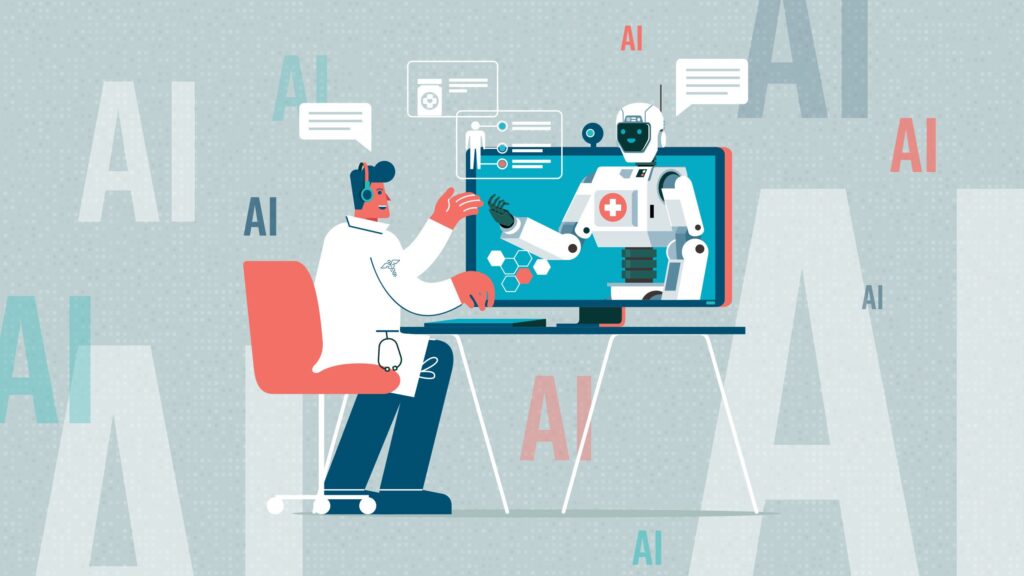
Artificial intelligence (AI) has become an integral part of our daily lives, with its influence extending profoundly into healthcare. Its rapid advancements are revolutionizing how medical professionals diagnose, treat, and manage patient care. As AI continues to evolve, it offers promising solutions to longstanding challenges in the medical field, from streamlining administrative workflows to enhancing diagnostic accuracy. This technological shift raises important questions about patient privacy, ethical considerations, and the future role of healthcare providers. Exploring these areas reveals how AI is shaping a new era of medicine, promising improved outcomes and increased efficiency across the healthcare spectrum.
How AI is Changing Healthcare Practice
The integration of artificial intelligence into healthcare has led to substantial improvements in operational efficiency and clinical accuracy. AI-powered tools are now routinely used to automate administrative tasks, such as managing patient records and billing, freeing up valuable time for healthcare providers to focus on patient interaction. For instance, AI-based transcription services, like electronic medical record (EMR) documentation tools, are becoming commonplace, allowing clinicians to dedicate more face-to-face time to their patients rather than being bogged down by paperwork. These innovations not only enhance patient experience but also contribute to higher quality care.
In clinical settings, AI assists with decision support, aiding physicians in diagnosing complex cases, suggesting treatment options, and reducing diagnostic errors. As these technologies develop further, their role in supporting clinical reasoning is expected to expand, leading to more precise and personalized treatment plans. For example, AI systems can analyze medical images more quickly and accurately than traditional methods, helping radiologists detect anomalies early and with greater confidence.
Furthermore, AI’s ability to process vast datasets enables it to identify patterns that might be invisible to human observers. This capability is crucial in predicting disease progression and tailoring preventative strategies. The potential for AI to support healthcare providers in real time is significant and continues to grow as technology advances.
Applications of AI by Medical Professionals and Patients
Healthcare practitioners are increasingly adopting AI tools to enhance diagnostic procedures, treatment planning, and administrative workflows. These tools are designed to support clinical decision-making, providing physicians with additional insights derived from large datasets, imaging, and genomic information. For example, AI algorithms can evaluate imaging scans to detect early signs of disease, assisting radiologists in making more accurate diagnoses. This integration of AI into routine care is a step toward more consistent and evidence-based medicine.
Patients, too, are beginning to utilize AI-driven applications for health management. From symptom checkers to personalized health monitoring devices, AI empowers individuals to take a more active role in their health. Telemedicine platforms equipped with AI features can triage patient inquiries, offer preliminary diagnoses, and direct patients to appropriate care pathways. Such advancements not only improve access to healthcare but also help in managing chronic conditions more effectively.
The development of virtual reality (VR) in sports training exemplifies how AI can enhance human performance outside traditional medical settings. By simulating real-world scenarios, VR combined with AI analytics can help athletes improve their skills and prevent injuries, demonstrating the broad applicability of AI technologies. For more on this, see how virtual reality is elevating athletic performance.
The Future Role of AI in Medicine
The future of AI in medicine is poised to be transformative, with ongoing innovations set to redefine clinical practice and healthcare delivery. AI systems capable of analyzing medical images, genetic data, and electronic health records are becoming more sophisticated, enabling early detection of diseases and personalized treatment strategies. These systems will increasingly serve as real-time decision-support tools, aiding clinicians in making faster, more accurate choices.
One promising area is predictive analytics, which can forecast disease trajectories and identify at-risk populations before symptoms manifest. This proactive approach has the potential to shift healthcare from reactive to preventive, reducing hospitalizations and improving patient outcomes. For example, AI-driven algorithms are being used to predict the likelihood of heart attacks or strokes based on patient data, allowing for early interventions.
In underserved regions, AI could bridge gaps in healthcare access by providing expert-level diagnostic support remotely. Such applications could significantly reduce disparities in healthcare quality and availability. However, there are challenges as well; AI models are only as good as the data they are trained on. If marginalized populations are underrepresented, biases may occur, leading to disparities in care delivery. Addressing these issues requires careful data management and inclusive training practices.
Interesting:
- Transformative impact of artificial intelligence on healthcare
- The transformative journey of artificial intelligence in healthcare and medical research
- The rise of publicly traded digital health firms and their impact on modern healthcare
- The transformative impact of ai machine learning and nlp on healthcare by 2025
Regulating AI in Healthcare
Establishing effective regulations for AI in medicine is critical to balancing innovation with patient safety. Regulatory agencies like the Food and Drug Administration (FDA) are developing frameworks to evaluate and validate AI tools before they are integrated into clinical practice. Ensuring that these technologies meet rigorous standards for safety, accuracy, and reliability is essential for building trust among healthcare providers and patients.
Post-market monitoring is equally important, as AI systems evolve and adapt over time. Continuous oversight helps identify unforeseen risks and ensures that AI remains effective and safe in diverse clinical environments. Standardized guidelines for testing, validation, and ongoing assessment are necessary to ensure consistent quality and to mitigate potential biases or errors.
To support responsible deployment, developers must adhere to strict data privacy laws such as HIPAA, ensuring patient information remains protected. Transparent algorithms and explainable AI models will also be vital in fostering confidence and accountability.
AI in Disease Diagnosis and Prevention
AI’s capacity to analyze complex data enables it to play a central role in early disease detection and preventative care. Algorithms can sift through electronic health records, lab results, imaging, and genetic information to identify early signs of chronic illnesses like diabetes, cardiovascular disease, and certain cancers. These predictive capabilities facilitate timely interventions, potentially preventing disease progression.
Recent studies, including reports from The Lancet, highlight how AI enhances early cancer detection through the analysis of medical imaging with remarkable precision. This allows clinicians to identify treatable conditions at stages when interventions are most effective. AI-driven risk assessments also support targeted screening programs, ensuring resources are allocated efficiently and patients receive appropriate preventive care.
The Human Element and Ethical Considerations
While AI offers numerous benefits, it is unlikely to replace healthcare professionals entirely. Instead, it will serve as a powerful tool to augment clinical judgment, handle repetitive tasks, and improve diagnostic accuracy. Physicians will continue to rely on their empathy, experience, and ethical reasoning — qualities that machines cannot replicate.
Nevertheless, ethical concerns about AI’s deployment in medicine are significant. Data privacy is paramount, given the sensitive nature of health information. Algorithms trained on biased or incomplete data can perpetuate disparities, particularly affecting marginalized populations. Ensuring diversity in training datasets and transparency in AI decision-making processes are crucial steps toward equitable healthcare.
Safety risks also exist if AI systems provide incorrect recommendations. Misdiagnoses or delayed treatments resulting from flawed algorithms could harm patients. Therefore, strict validation protocols, continuous monitoring, and adherence to privacy regulations like HIPAA are essential safeguards.
Conclusion
AI’s influence on medicine is profound and expanding, promising to revolutionize diagnostics, treatment, and healthcare delivery. By supporting clinicians with sophisticated decision-making tools and empowering patients through accessible technology, AI stands to make healthcare more efficient, equitable, and effective. However, realizing this potential requires careful regulation, ethical vigilance, and ongoing research to address biases and safeguard patient safety. As the field evolves, collaboration among technologists, clinicians, and policymakers will be essential to harness AI’s full promise responsibly. For further insights into how AI is transforming the medical landscape, explore transforming medicine through innovative applications.